You're reading AI Transformation
AI Transformation
Make agentic engineering stick in your team
Your engineers already use AI. Some of them fly with it, most don't, and nobody can tell you what it's actually changing. We diagnose where your team stands, design the adoption plan, and implement it with you until it's simply how your team ships.
- Three phases: diagnose, plan, implement
- Hands-on, inside your team
- Output measured before and after
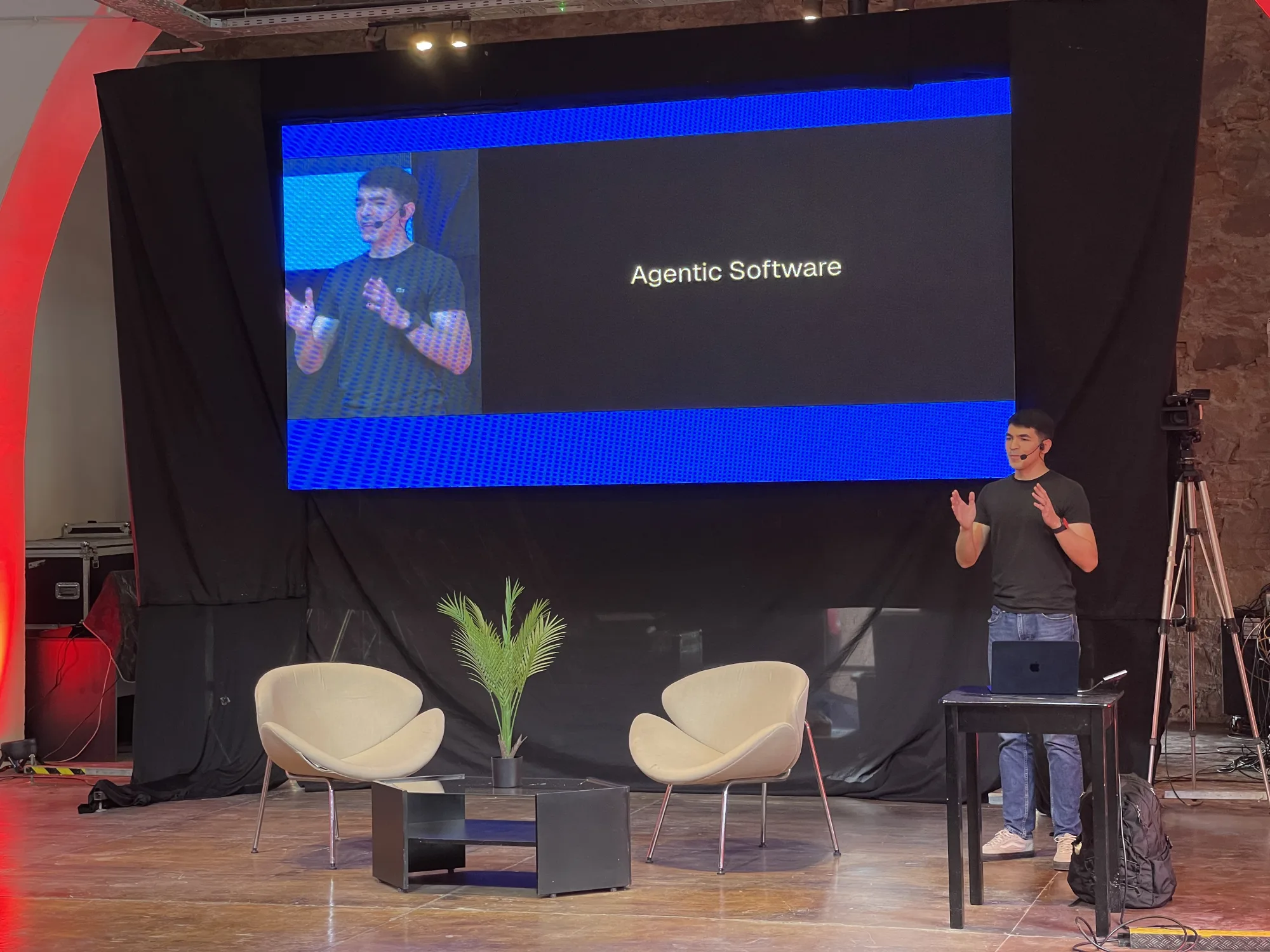
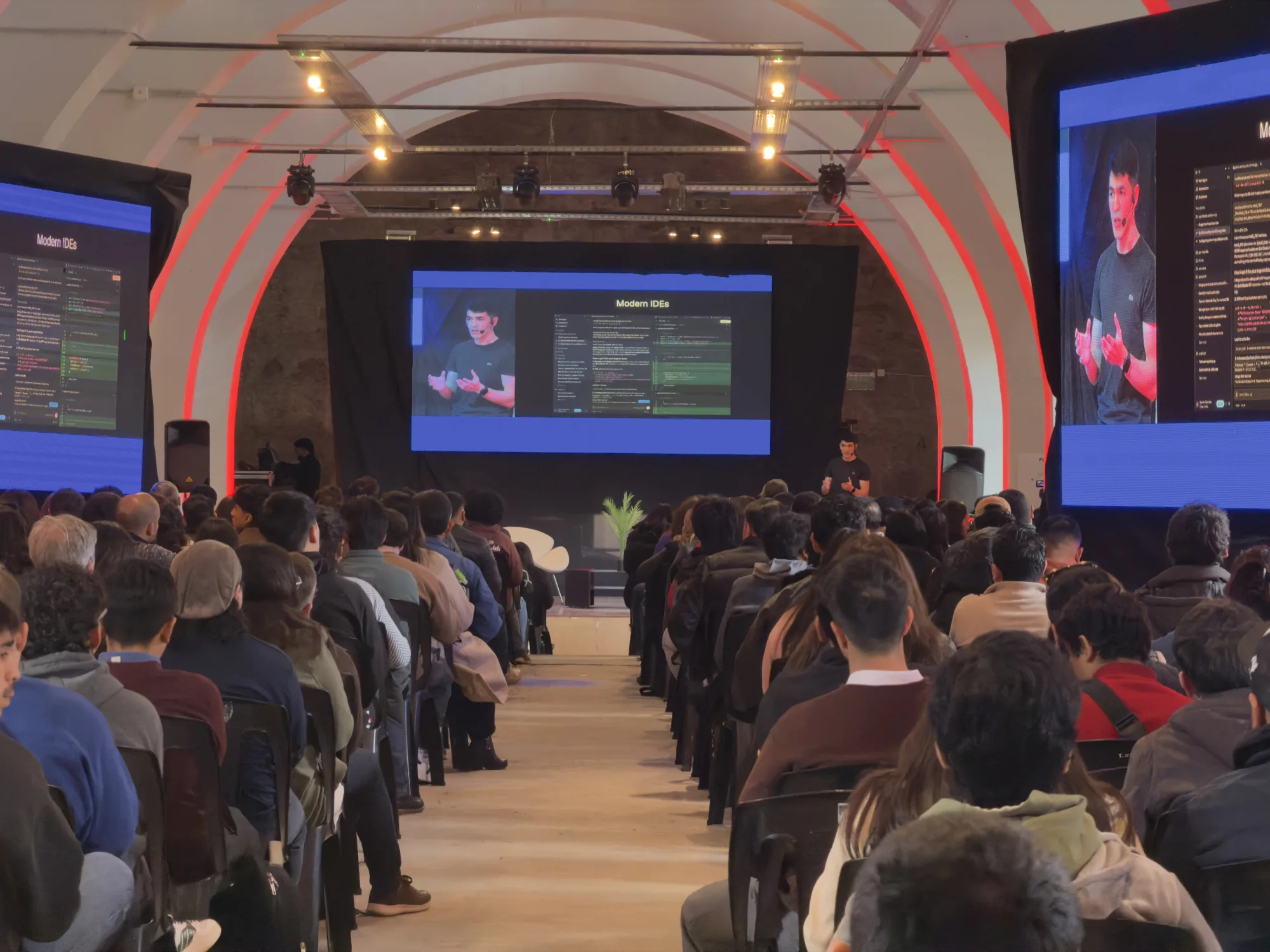
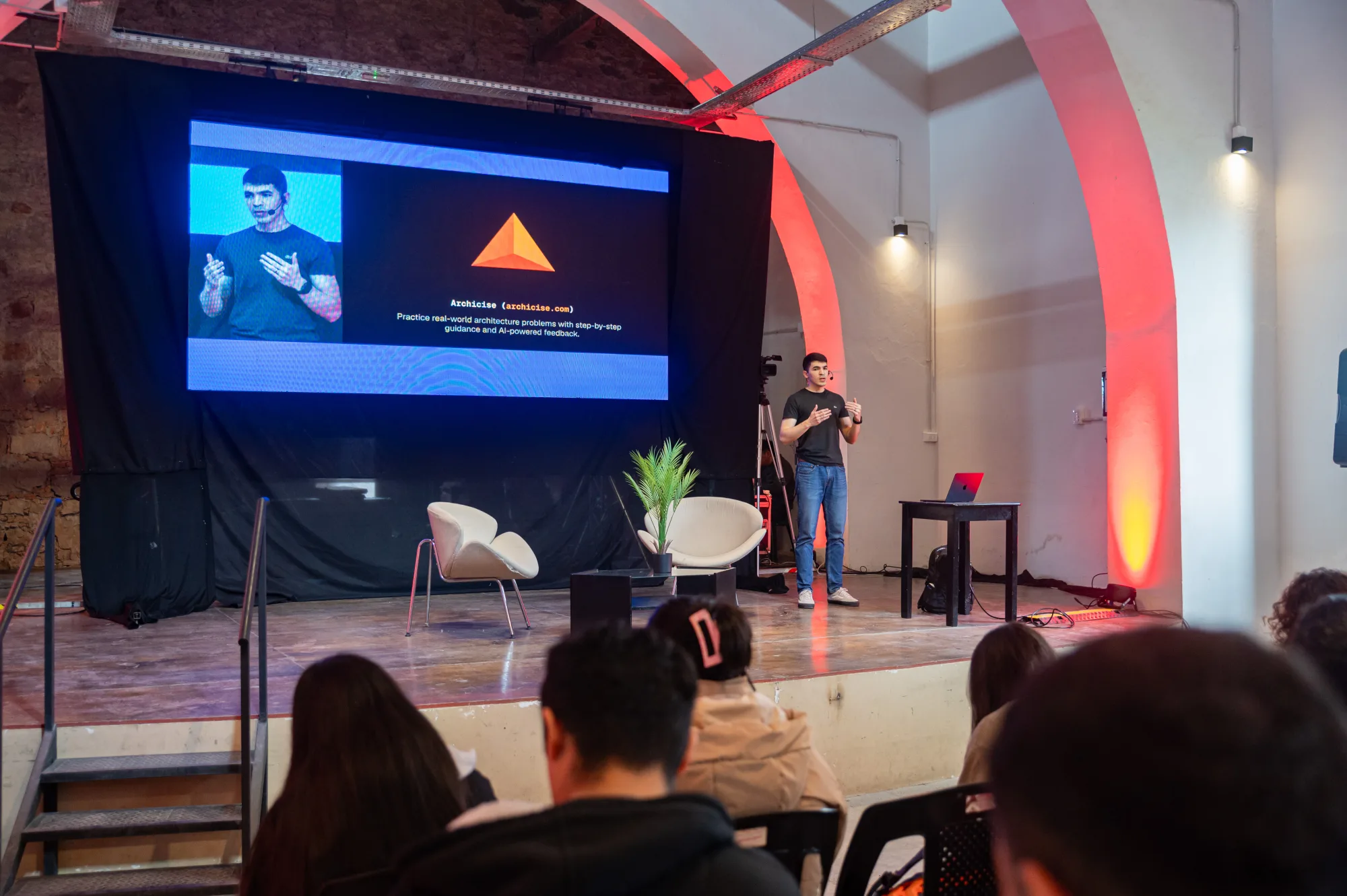
Agustín Sánchez speaking about Agentic Software.
The tools are there. The change isn't.
Buying licenses was the easy part. Getting a whole team to build differently — same conventions, same guardrails, measurable results — is the work nobody has time to own.
Adoption is uneven
Two engineers run agents end to end. The rest paste snippets from a chat window. Same tools, wildly different output — and the gap grows every sprint.
Nobody owns it
There's no agreed workflow, no repo conventions written for agents, no metric anyone reports on. It stays an individual habit instead of how the team works.
Time leaks silently
Prompts rewritten from scratch, reviews of code nobody fully read, CI that wasn't designed for agent-generated changes. It all costs hours that never show up in a ticket.
Diagnose. Plan. Implement.
Your team already builds software. We diagnose how, then implement the plan for them to work with agentic engineering at a level they can't reach on their own.
01
Diagnosis
We map how your team builds today: workflows, tooling, codebase shape, CI, testing — where AI already helps and where it's silently costing you time. You get the real bottlenecks, ranked.
02
Plan
A concrete adoption roadmap: which agentic techniques and tooling, per role, prioritized by impact, with the guardrails and the metrics we'll judge it by.
03
Implementation
We work inside your team until it sticks: hands-on sessions, setting up the tooling and repo conventions, and measuring output before and after.
Best if you already have a software team and know AI should be making it faster, but adoption is uneven and nobody owns it.
Concrete outputs, not a slide deck
Every phase leaves something your team keeps using after we're gone.
01 · Diagnosis
Ranked bottleneck map
Where AI already helps, where it's silently costing you time, and what to fix first.
01 · Diagnosis
Baseline of today's output
How fast your team ships now, measured so the after has something honest to compare against.
02 · Plan
Per-role adoption roadmap
Which agentic techniques and tools each role adopts, in what order, and why.
02 · Plan
Guardrails and metrics
The review rules, the limits and the numbers you'll judge the adoption by.
03 · Implementation
Tooling and repo conventions
Agent instructions, skills and CI set up in your actual repositories, not in a sandbox.
03 · Implementation
Hands-on sessions
Working sessions with your engineers on your real backlog, until the new way of shipping is the default.
The method, written down
We run our own studio this way and document it as we go. These are the articles we point teams to first.

Loop Engineering: From Backlog Issue to Shipped Code
How we closed the loop on agentic coding at DIZENZ — a self-driving cycle from a raw backlog issue to code deployed to a test environment, with two Claude Code agents, a two-pass Opus review, and a quality gate that runs on the laptop instead of GitHub Actions.

Agustín Sánchez
Find out where your team really stands
Thirty minutes with Agustín to walk through how your team builds today and whether the diagnosis makes sense for you. No deck, no pitch.