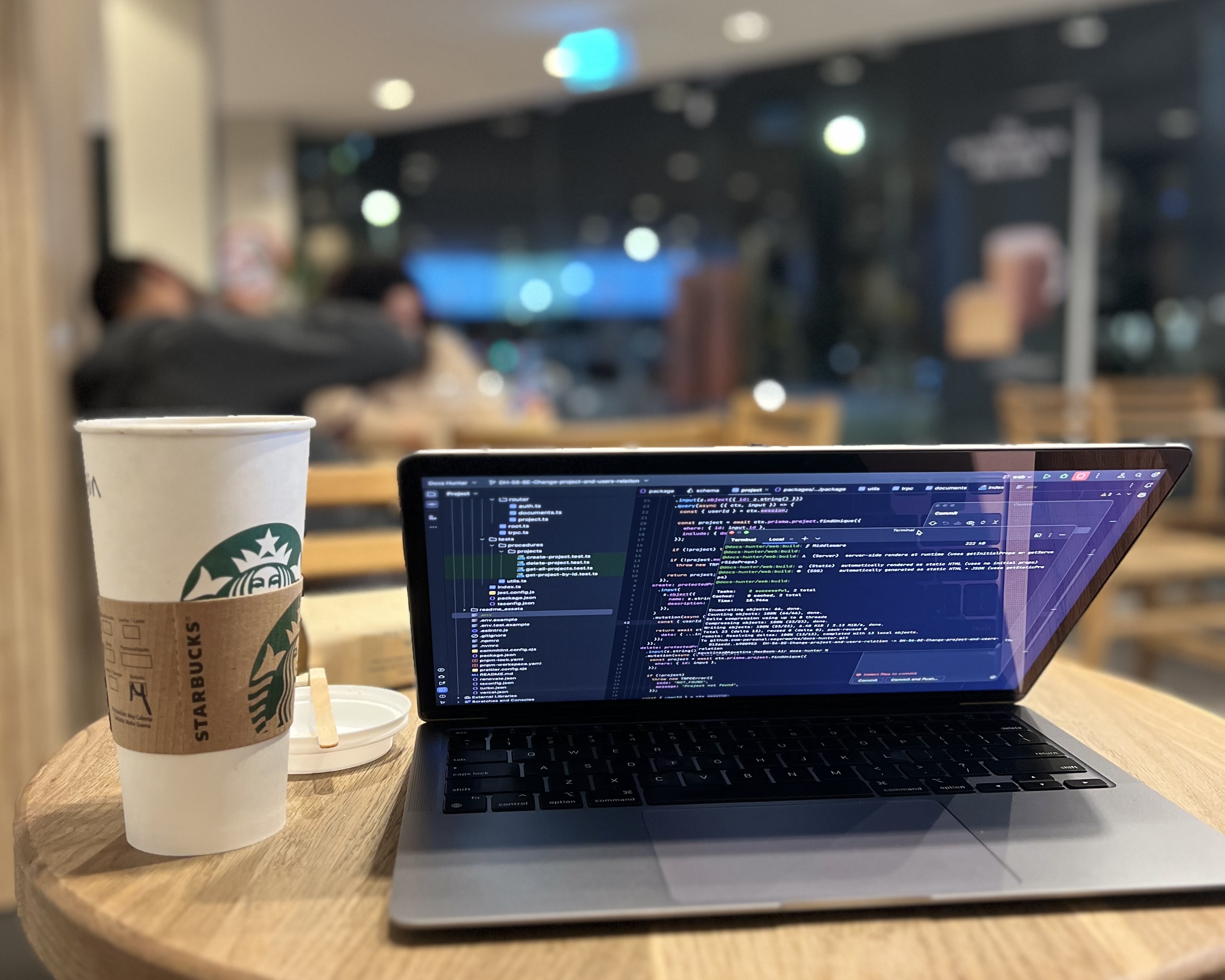

Software development is undergoing a fundamental paradigm shift. The traditional model of developers writing every line of code manually is rapidly evolving into something far more powerful: agentic coding, where AI agents become true collaborative partners in the development process.
At DIZENZ, we've fully embraced this transformation. We're not just experimenting with AI tools. We've fundamentally restructured our development workflow around agentic coding principles. This shift has allowed us to build better software faster while maintaining the highest standards of quality.
In this article, I'll share what we've learned about agentic coding, how we implement it at DIZENZ, and why we believe it represents the future of software development.
What is Agentic Coding?
Agentic coding goes far beyond autocomplete or code suggestions. It's a collaborative development methodology where AI agents actively participate in the entire software development lifecycle, from architecture and design to implementation, testing, and refactoring.
Unlike traditional AI-assisted coding tools that simply predict the next line of code, agentic coding involves AI agents that can understand context, make architectural decisions, write complete features, and even debug complex issues. These agents work alongside developers as true collaborative partners.
Autocomplete
- Predicts the next line or block
- No context beyond the open file
- Developer authors every decision
Agentic coding
- Understands the surrounding codebase
- Makes architectural decisions
- Writes, tests, and debugs full features
Guided by experienced engineers
AI models are only as powerful as the engineers who have the criteria to verify and coordinate their work.
Agentic coding doesn't replace developers. It enhances them. The AI handles repetitive implementation tasks, allowing developers to focus on what matters most: architecture, problem-solving, code review, and ensuring the final product meets quality standards. It's a symbiotic relationship where both human expertise and AI capabilities combine to produce better results than either could achieve alone.
Benefits of Agentic Coding
The advantages of agentic coding extend across every aspect of software development:
Increased Productivity & Velocity
AI agents write boilerplate, implement well-defined features, and handle repetitive tasks in minutes rather than hours, dramatically accelerating development cycles.
Better Code Quality
With AI handling implementation details, developers can focus on code review, architecture, and ensuring best practices are followed throughout the codebase.
Focus on High-Value Work
Developers spend more time on problem-solving, system design, and strategic decisions rather than writing repetitive code.
Faster Iteration Cycles
The ability to quickly implement and test ideas means faster feedback loops and more rapid product evolution.
Reduced Cognitive Load
By delegating routine implementation to AI agents, developers maintain mental clarity for complex architectural decisions and creative problem-solving.
Our Agentic Workflow at DIZENZ
At DIZENZ, the whole team builds on Claude Code. Standardizing on one tool freed up the choice that actually matters: which model handles a given task. The important part isn't loyalty to a specific model, but having experienced engineers who can evaluate the output, pick the right model for the task, and keep quality high.
One of our key strategies is strategic model selection. We don't use the same AI model for every task.
Claude Opus
Complex architectural decisions and system design, where deep reasoning matters most.
Claude Sonnet
Standard feature implementation — a strong balance of capability and speed for everyday work.
Claude Haiku
Quick tasks, simple refactors, and straightforward implementations that need fast turnaround.
picked per task, revisited often
We heavily rely on plan mode to increase agent correctness. Before implementing significant features, we ask the AI agent to create a detailed plan.
Explore the codebase
The agent reads the relevant files and identifies everything the change will touch.
Propose a plan
A detailed implementation strategy, laid out before a single line of code is written.
Engineer reviews and adjusts
We check the approach against our judgment and redirect it wherever it's off.
Implement against the plan
The agent builds against an approach we've already agreed is right.
Issues caught before a line is written
Planning turns expensive late fixes into cheap early corrections.
Our philosophy is to use agentic coding carefully but as efficiently as possible. We're not reckless. We don't blindly accept AI-generated code. Instead, we leverage our experience and expertise to guide, verify, and refine the AI's work. The key is having seasoned engineers with strong criteria and deep knowledge who can effectively coordinate AI output and ensure it meets our quality standards.
This careful but efficient approach means we get the velocity benefits of agentic coding while maintaining the quality and reliability that our clients expect. It's about being smart with AI, not just fast.
The Importance of Project Structure
Here's something crucial that many teams overlook: AI agents work far more effectively when projects are well-structured. A messy codebase with poor documentation and unclear patterns will produce mediocre results even with the best AI tools.
Clear feature descriptions are essential. When you can articulate exactly what a feature should do, the AI agent can implement it effectively.
Clear specifications
Detailed user stories and explicit acceptance criteria, so the agent implements what's actually intended instead of guessing.
Consistent patterns
A codebase that repeats its own conventions gives the agent a template to follow instead of a blank page.
Documented conventions
Written guidance on architecture and style means the agent doesn't have to reverse-engineer intent from scattered examples.
Automated test coverage
Tests turn "looks right" into "is right", catching regressions an agent introduces before a human has to.
Code review processes become even more important with agentic coding. Every AI-generated change goes through a two-stage review process — automated agent review followed by rigorous human review — where both AI efficiency and human expertise shine.
Our own review agent
A read-only agent running on Opus with high reasoning effort reviews every pull request for correctness bugs, security and data-integrity issues, and deviations from our repo conventions — and flags any acceptance criterion with no test proving it as high severity.
Human review
Developers verify the implementation matches requirements, handles edge cases, and fits cleanly with existing code.
CI/CD
Automated tests run as a safety net, catching anything that slipped through both review stages.
We maintain robust CI/CD pipelines with comprehensive automated testing. These systems act as safety nets, catching issues that might slip through. When an AI agent makes a change, our automated tests immediately verify that nothing broke. This rapid feedback loop is crucial for maintaining code quality while moving fast. Well-structured projects with good practices in place enable AI agents to work at their full potential.
The Future is Agentic
The future of software development is clear: it's agentic. As AI models continue to improve, the collaboration between human developers and AI agents will become even more seamless and powerful. We're just at the beginning of this transformation.
However, the future isn't about AI replacing developers. It's about augmenting them. The most successful teams will be those that combine experienced developers who can guide, verify, and coordinate AI work with powerful agentic tools. At DIZENZ, we're committed to staying at the forefront of this evolution, continuously refining our workflow and practices to deliver exceptional software using the best of human expertise and AI capabilities. If you're ready to build something amazing with cutting-edge development practices, let's connect.